




































byUniversity of Tasmania
Credit: Pixabay/CC0 Public Domain
Could showing someone a picture of plaque building up in their arteries be enough to save their life? That's the question driving the latest research by the University of Tasmania's Menzies Institute for Medical Research and the Baker Heart and Diabetes Institute into how to prevent the progression of cardiovascular disease.
Many people with inherited heart disease have been told their heart risk score—including cholesterol levels, family history and blood pressure readings—but numbers alone don't always inspire lasting change. Even knowing other family members died of heart disease isn't enough to convince some people that they themselves are at high risk. So the research team showed people images of calcium deposits in their coronary arteries, and that has created lasting change in the way they live their lives.
The study, led by Professor Tom Marwick and Ph.D. candidate and Clinical Nurse, Kristyn Whitmore, have been following 258 Australians with a family history of heart disease for about eight years. As Whitmore explains, "If someone feels well still, it can be hard to persuade them to take medicine on an ongoing basis, even when we tell them their heart risk score."
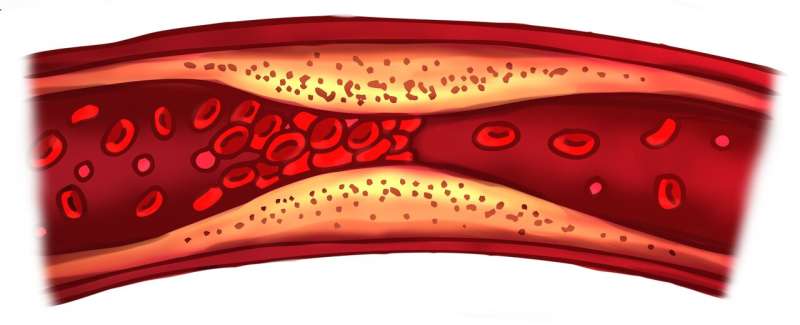
"The threat to their health may seem an abstract idea that they can't see and they can't feel but in this study, we also showed them the calcified plaque buildup hardening and narrowing their arteries. They could understand how that would increase the risk of a heart attack and stroke so it convinced them to take cholesterol-lowering medication (statins)—to reduce the progression of fatty plaque and prevent more severe heart blockages."
Professor Marwick added, "This study shows that using pictures of calcified plaque (calcium) as well as conventional risk information is helping to bridge a person's knowledge gap and improve adherence to both medication and lifestyle change. This is really important because around 50% of Australians stop taking their statins within a year."
In the study, half received nurse-led care that included repeated viewing of their coronary artery calcium scans during the first three years. The other half received standard care and only saw their scan results at the three-year mark. The people who saw their coronary calcium scans repeatedly in the study were far more likely to start taking statins and keep taking them. After three years, 85% were still on treatment.
At the eight-year follow-up in Hobart and Melbourne, the benefits had persisted, as detailed in the paperpublishedinJACC: Cardiovascular Imaging. Those who'dseen their scansrepeatedly maintained high medication rates (71%). The standard care group increased remarkably from 5% to 59% of people taking statins—proof that seeing an image once can be enough to spark action. The higher a Coronary Artery Calcium score, the more likely they were to continue taking their statins. Researchers found patients who viewed calcium build-up in their arteries were more likely to have improved levels of risk factors like cholesterol and blood pressure, and overall heart risk reduction.
Professor Marwick says when the heart health check or the standard risk calculators indicate the risk is very low or the risk is very high, we can decide on treatment. But there are around 40% or 50% of the population who are at intermediate risk. For those people deemed atintermediate riskwho have no prior heart history, these images can help reclassify them into lower or higher risk groups.
"I hope that studies like this may help to justify thewider useof heart imaging like coronary artery calcium scans to enable GPs to strengthen their patients' understanding of their personal risk. It could very well save their lives."
More information Kristyn Whitmore et al, Repeated Visualization of Coronary Calcium and Long-term Outcomes, JACC: Cardiovascular Imaging (2026). DOI: 10.1016/j.jcmg.2026.01.012










Post comments