




































Abstract
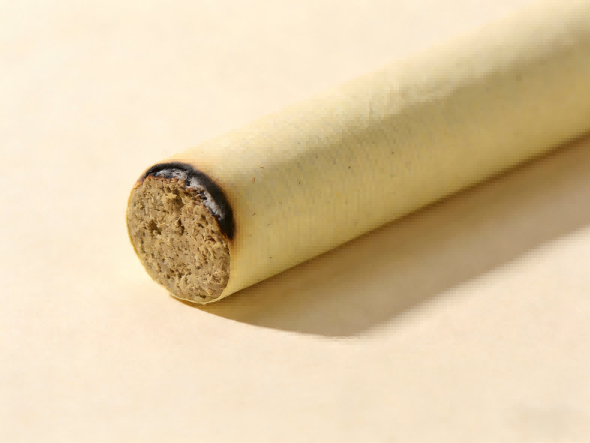
Taking the evolutionary thread of Wormwood – Moxibustion – Aijiu as the clue, this paper systematically reviews the historical origin, cultural connotation and medical status of moxibustion in China, and analyzes the cognitive bias and cultural obscuration caused by terminological translation in its international communication. On this basis, this paper puts forward the rationality of taking Aijiu as the international general term, and demonstrates its advantages from the perspectives of phonetics, cultural integrity, scientific relevance and the trend of international standardization.
Keywords: Wormwood; Moxibustion; Aijiu; Terminological Standardization; Cultural Communication; Internationalization of Traditional Chinese Medicine
1 Introduction
1.1 Research Background
Against the background of the global renaissance of traditional medicine and the international opportunities for Chinese moxibustion, the problems of cultural loss and identity ambiguity in terminological translation have become increasingly prominent.
In 2024, the scale of China’s moxibustion market reached approximately 90 billion RMB, with a compound annual growth rate (CAGR) of 16.53% from 2020 to 2024 . However, the ambiguity and cultural separation of the current international general term moxibustion and its derivatives have become an invisible barrier to interdisciplinary communication, standardized research and cultural identity.
The term moxibustion originated from the European missionaries’ translation of Japanese in the 17th century. This translation chain has led to the fragmentation and connotational deviation of the terminological system. The ambiguity of terms has caused difficulties in the integration of academic research data, chaotic naming in industrial promotion, separation from cultural roots in communication, and other problems.
This study proposes using the Chinese pinyin Aijiu as the international general term for moxibustion. It aims to solve the current communication dilemmas through phonetic convenience, complete cultural connotation and close scientific relevance, and promote the transformation of moxibustion from “an alternative therapy from a Western perspective” to “an independent discipline with Chinese cultural characteristics”.
1.2 Research Purpose and Significance
The core purpose of this study is to promote the unified international adoption of Aijiu instead of moxibustion through terminological reconstruction and theoretical demonstration, so as to systematically solve the dilemmas of conceptual ambiguity, cultural fracture and disciplinary identity in the global spread of moxibustion.
The specific objectives include:
- Clarify the formation of the translation chain from “moxibustion” to moxibustion, and reveal the mechanism of cultural filtering and semantic loss;
- Sort out the historical and cultural origin and international communication context of moxibustion, providing historical and theoretical support for the rationality of Aijiu;
- Build an accurate, easy-to-spread international terminology system with complete cultural connotation, and promote cross-cultural communication and disciplinary internationalization of moxibustion.
The academic significance lies in:
- Promoting the paradigm shift of traditional Chinese medicine (TCM) disciplines, prompting the academic community to re-examine the relationship between the cultural essence and scientific attributes of TCM;
- Breaking through the traditional “domestication / foreignization” translation strategies and proposing a “culture-oriented” terminological construction method;
- Promoting the transformation of moxibustion research from scattered clinical observations to systematic disciplinary construction, and helping to establish an independent academic discourse system.
2 Historical and Cultural Origin of Wormwood and Moxibustion
2.1 Botanical and Medicinal Origin of Wormwood
The Chinese character “艾 (ài)” first appeared in oracle bone inscriptions, originally meaning “treatment”, and later evolved to specifically refer to wormwood (Artemisia argyi). Ancient documents recorded the medicinal value of wormwood.
The combination of “ài (wormwood)” and “jiǔ (moxibustion)” was first documented in Lingshu·Guanneng (The Spiritual Pivot · Official Ability) of Huangdi Neijing (The Yellow Emperor's Internal Classic), which listed it as a core external treatment of TCM alongside acupuncture .
Artemisia argyi belongs to the genus Artemisia in the Asteraceae family. Its dense leaf trichomes and high volatile oil content are the key factors ensuring the “long-lasting warmth and strong permeability” of moxibustion . Native to the Yellow River and Yangtze River basins in China, wormwood is now mainly cultivated artificially .
The medicinal value of wormwood comes from its complex and synergistic chemical components, mainly including volatile oil, flavonoids, polysaccharides and organic acids . Among them, volatile oil gives wormwood its unique aroma and significant antibacterial and anti-inflammatory effects; flavonoids can improve glycolipid metabolism disorders by regulating the abundance of specific bacteria in the intestinal flora .
In addition, the ethyl acetate fraction of wormwood has been found to target specific signaling pathways to exert anti-ovarian cancer effects. Its multi-component and multi-target mode of action also provides modern pharmacological evidence for wormwood’s functions of “warming meridians to stop bleeding, dispelling cold and dampness” .
Modern pharmacology has confirmed that the irritating components of volatile oil in aged wormwood decrease, while the mild components remain relatively stable . The ancient principle that “aged wormwood is superior to fresh wormwood” is consistent with modern findings that the active components of wormwood change beneficially with storage and processing.
A 2025 study confirmed through acute and subchronic toxicity evaluations that tender wormwood leaves picked during the Dragon Boat Festival have no obvious toxic or side effects after processing, and can also regulate lipid metabolism for health benefits .
In clinical applications, as an adjuvant therapy, moxibustion plays a positive role in the adjuvant treatment of malignant tumors .
Modern pharmacological and clinical research provides scientific evidence for the medicinal properties of wormwood and reveals the multi-target mechanism of moxibustion. The Chinese Pharmacopoeia (2020 Edition) and industrial standards (such as GAP) regulate the quality and safety of wormwood, laying a technical foundation for the international standardization of the term Aijiu.
2.2 Origin and Classic Literature Records of Moxibustion
Huangdi Neijing, the earliest medical classic in China, systematically expounded the concept and theoretical basis of moxibustion, and established its complementary therapeutic status with acupuncture . Nan Jing (Classic of Difficult Issues) further discussed the therapeutic principles and operational details of moxibustion .
From 200 BCE to 1300 CE, moxibustion was fully documented in classic medical books with complete treatment cases, greatly improving the therapeutic system of moxibustion . Ancient medical records detailed the procedures and precautions of moxibustion operation.
The value of classic literature lies in systematically sorting out the ancient understanding framework of moxibustion and restoring its development from empirical practice to theoretical systematization.
2.3 Spread and Evolution of Moxibustion in East Asia
Moxibustion spread to East Asia between 600 and 900 CE and underwent localized transformation .
In Korea, during this period, Donguibogam (Principles and Practice of Eastern Medicine) by Heo Jun listed “moxibustion” as an important part of the “Acupuncture and Moxibustion Section”, and adjusted it according to Korea’s climate and physical characteristics. To further promote localization, Dongyi Suse Bowon (Exemplar of Eastern Medicine) by Lee Je-ma proposed the “Four-Image Medicine” theory, integrated moxibustion with constitution differentiation, and innovated related instruments .
In Japan, Ishinpō (Prescriptions from the Heart of Medicine) systematically compiled the acupoints and operation methods of moxibustion ; later, Zen monks developed “Zen moxustion”. Japanese physician Manase Dōsan put forward the idea that “moxibustion cures all diseases”, innovated techniques such as “box moxibustion” and “warm moxibustion”, and simplified “moxibustion” to kyū.
- China emphasizes moxibustion based on syndrome differentiation, mostly uses aged wormwood, and retains the full Chinese characters “艾灸”;
- Korea focuses on “warm moxibustion for consolidating the foundation”, produces “medicinal wormwood”, and only retains the character “灸”, pronounced chimsu;
- Japan developed “strong-stimulation moxibustion”, prefers fresh wormwood, and simplifies the term to kyū.
These differences led to the break of the translation chain. Western scholars came into contact with “kyū” via Japan, but ignored the original meaning of “moxibustion” in the translation.
3 Dilemmas in the International Communication of Moxibustion Terminology
3.1 The Translation Chain: “艾灸” → moxa → moxibustion
At the end of the 16th century, Portuguese missionary Luís Fróis first recorded the word moxa in Historia de Japam, transliterated from Japanese.
In the 17th–18th centuries, German physician Engelbert Kaempfer further refined the definition of moxa in Amoenitates Exoticae, referring only to wormwood wool, focusing on botanical attributes rather than the TCM therapeutic logic.
In the 19th century, British physician William Lockhart combined moxa with bustion (combustion) to create the term moxibustion. This coinage simplifies moxibustion to a “combustion act”, stripping away the theoretical background of TCM meridians, Qi and blood, and equating it with “thermal therapy” in the Western context. Even substitutes such as cotton and lime were used in the West to mimic the practice .
The formation of this translation chain is essentially a process of decontextualization of the TCM concept of moxibustion, causing three problems: conceptual fragmentation, practical confusion and loss of cultural connotation.
3.2 Problems Caused by Terminological Ambiguity
Terminological ambiguity results from the coexistence of multiple translations, generalized conceptual extension and Westernized translation tendencies, triggering a chain reaction in academic research, international exchange, clinical practice and cultural communication.
- Literature retrieval efficiency drops sharply due to inconsistent terms; professional databases cannot quickly clarify the classification of East Asian moxibustion, and interdisciplinary dialogue is hindered by terminology barriers.
- The Western mainstream medical system interprets moxibustion as “thermal stimulation therapy”, marginalizing its cultural and theoretical connotations, so that public perception stays at the level of “physical heat therapy”.
- Clinical guidelines are not standardized due to vague terms; industrial naming is chaotic, with brands in different countries using different terms, confusing consumers and leading to inconsistent regulatory standards.
- Cultural communication fails to help Westerners understand the traditional culture of moxibustion or trace its authentic origin.
3.3 International Acceptance of Non-Western Terms: Lessons from the “Milu (Père David's Deer)” Case
The international acceptance of the Chinese pinyin Milu for Père David's deer provides a reference for the internationalization of moxibustion terminology .
In the late 19th century, French missionary Père Armand David brought milu specimens to Europe, and zoologist Edward Blyth named it Elaphurus davidianus.
From the 1980s, Chinese scholars began to use the pinyin Milu in international academic journals. Its simple and clear pronunciation preserves the cultural root of the Chinese name. International organizations have also adopted Milu as a common name, inheriting the culture of “milu” through professional endorsement and bilingual coexistence. This provides a useful reference for the terminological reconstruction of Aijiu.
4 Rationality and Advantages of “Aijiu” as an International Term
Aijiu has significant advantages in phonetic structure: it is a disyllabic word without complex consonant clusters, making pronunciation smooth and natural. In contrast, moxibustion is four-syllable with multiple difficult consonant clusters, prone to mispronunciation.
Aijiu is highly friendly for oral communication, easy to capture in podcasts and short videos; it has few label characters and simple spelling, with no difficult phonemes while retaining Chinese phonetic features.
Aijiu fully inherits both “ài (wormwood)” and “jiǔ (moxibustion)”, reflecting the preservation of cultural integrity.
The European Pharmacopoeia defines moxibustion only as “dried wormwood leaves” and classifies it as “thermal therapy” in clinical guidelines. Replacing it with Aijiu can restore cultural authenticity in literature indexing, academic retrieval, marketing and other fields.
Terminological standardization is of great significance for academic exchange, clinical promotion and industrial development. Promoting the inclusion of Aijiu in international standards requires collaboration between academia, industry and international organizations.
5 Paths to Promote the Internationalization of the Term “Aijiu”
Building academic consensus on Aijiu requires multi-level and cross-domain collaboration.
It is suggested to hold an “International Symposium on Aijiu Terminology”, inviting relevant experts for cross-disciplinary discussions to form a Preliminary Framework of Aijiu Terminology Consensus. Launch interdisciplinary cooperative projects to conduct a “Global Survey on the Use of Moxibustion Terms”, collect opinions from all sectors through online platforms, and finally formulate and publish the International Academic Consensus on Aijiu Terminology.
At present, the scattered brands and logos of the moxibustion industry cause cognitive confusion and industrial collaboration obstacles. Building a unified Aijiu identification system should start with brand naming, visual design and application specifications:
- Register trademarks based on “phonetic consistency”;
- Integrate core elements such as wormwood, flame and airflow in visual identity design, with color schemes conveying nature, health and warmth;
- Develop an identification usage manual to clarify application rules and scenario demonstrations.
6.Strategic Value and Future Prospects of “Aijiu”
The role of Aijiu in cultural identity reconstruction is reflected in its internal connection with Chinese culture. Etymologically, Aijiu is formed from the pinyin of “ài” and “jiǔ”, carrying the historical memory of Chinese pictographs and relating to TCM theories. In terms of symbolic integrity, the pinyin form of Aijiu retains Chinese phonetic features and meets the international requirement of “transparent word formation”.
The unification of the Aijiu term acts as an “adhesive” for industrial upgrading, boosting all links in the industrial chain:
- In production and quality standardization, promote the establishment of a “Geographical Indication Aijiu Wormwood” certification system;
- Technological innovation and R&D investment can attract more interdisciplinary research resources;
- Brand building and market segmentation help enterprises get rid of the “generic product” positioning;
- In digitalization and supply chain collaboration, build an “Aijiu Industrial Big Data Center”.
Efforts should be made in both international standard and certification layout, and new media and cross-border e-commerce platforms should be utilized. Policy support and industrial alliances should be adopted, special policies issued and promotion alliances established. In talent training and international team building, relevant courses can be offered and joint training carried out.
The core of building a complete professional disciplinary system of Aijiu is to realize the two-way integration of theoretical research and practical application:
- Theoretically, build a special framework covering historical and cultural origin, TCM basic theory and modern scientific interpretation;
- In practice, clearly standardize clinical operation standards; textbooks and curriculum design should balance cultural inheritance, scientific interpretation and clinical practice, adopting bilingual teaching in Chinese and English and integrating case-based teaching.
Drawing on the experience of international integrated communication of traditional therapy terms such as “acupuncture”, “yoga” and “Ayurveda”, optimize the terminology specification and international expression of Aijiu to help it better integrate into the global traditional medicine system.








Post comments