




































by Josephine Wright, Susan Woods,The Conversation
Credit: CC0 Public Domain
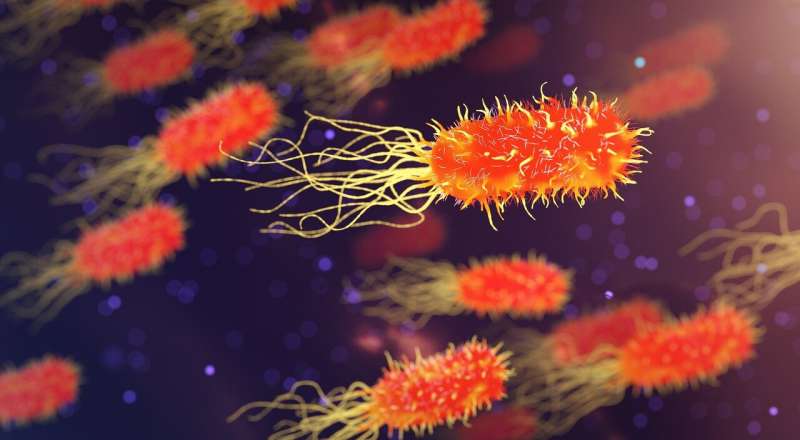
Bacteria are rapidly emerging as anew classof "living medicines" used to kill cancer cells.
We're still a long way from a "cure" for cancer.
But one day we could have programmable, self-navigating bacteria that find tumors, release treatment only where needed, then vanish without a trace.
Here's where the science is up to.
Many tumors are hard to treat. Sometimes, treatments cannot penetrate them. Other times, tumors can "fight back" by suppressing certain parts of theimmune system, reducing the impact of treatments. Or tumors can develop resistance to treatments.
Using bacteria could overcome these obstacles.
More than a century ago,surgeons noticedsome people with cancer who developed bacterial infections unexpectedly went into remission. That is, their cancer signs or symptoms decreased or disappeared.
Now we're learning what could explain this. Broadly speaking, bacteria can activate the body's immune system to attackcancer cells.
In fact, this approach is already used in the clinic. Bacteria are now the treatment of choice worldwide for certain cases of bladder cancer. When doctors deliver a weakened version of Mycobacterium bovis directly into the bladder through a catheter, the body's immune responsedestroys the cancer.
Certain bacteria have an unusual talent. They can naturally find and grow inside solid tumors—ones that grow in organs and tissues—but leave healthy tissue relatively untouched.
Solid tumors are perfect homes for these bacteria as they contain lots of nutrients from dead cells, are low in oxygen (an environment these bacteria prefer), and typically have reduced immune function, so they cannot defend themselves against the bacteria.
All this suggests possible careers for these bacteria as delivery couriers to carry targeted, anti-tumor therapies.
Over the past 30 years or so, more than 500 research papers, 70clinical trialsand 24startup companieshave focused on bacterial cancer therapy, with growth accelerating sharply in the past five years.
Most bacterial cancer therapies in clinical trials today target solid tumors, including pancreatic, lung, and head and neck cancers, which are the kinds that often resist conventional treatments.
Cancer vaccineswork by presenting a cancer's unique molecular "fingerprints," known as tumor antigens, to the immune system so it can hunt down and eliminate tumor cells displaying those antigens.
Bacteria can serve as couriers for these anti-cancer vaccines. Usinggenetic engineering, the genetic instructions (or DNA) in bacteria that might make us unwell can be removed and replaced with DNA for immune-stimulating tumor antigens.
Listeria monocytogenes is themain characterin more than 30 cancer vaccine clinical trials. Unfortunately, most of these trials did not show that these treatments work better than current ones.
The challenge is teaching the immune system to recognize cancer's telltale antigens strongly enough to remember them, without pushing the body into dangerous overdrive.
Nearly half of current clinical trials using bacteria in cancer therapies pair bacteria with immunotherapies or chemotherapy as part ofpersonalized treatmentplans to enhance the body's attack on cancer.
Various approaches have finished phase 2 clinical trials. These include using immunotherapy combined with modifiedListeriato activatethe immune system forrecurrent cervical cancer.
Another trialused modifiedSalmonellain people with advanced pancreatic cancer alongside chemotherapyto increase survival.
Arming bacteria with a drug means they could destroy the tumor from the inside, creating "bugs as drugs."
For this, we need precise genetic control over how bacteria behave. Researchers can already reprogram bacteria to sense, compute and respond to molecular signals around thetumor.
Researchers can also engineer bacteria to self-destruct after delivering a drug,secrete immune-boosting molecules, or activate other therapies on command.
Researchers are building "multi-function" strains that combineseveral treatment strategiesat once.
Probiotic species used in humans for many years arealso candidates, including Escherichia coli Nissle, Lactobacillus and Bifidobacterium. These can be engineered to produce cancer-killing molecules or alter the environment around the tumor.
While early human trials have shown this approach is generally safe, finding the right dose remains a delicate balance.
Bacteria are also living entities that can evolve in unpredictable ways, and their use in humans demands strict safety controls. Even strains modified for safety can cause infection or trigger excessive inflammation.
So scientists are developing "biocontainment" strategies—engineered safeguards that prevent bacterial spread beyond tumors or triggers them to self-destruct after treatment.
If we can overcome these issues, such "living medicines" would still need to successfully complete clinical trials and receive regulatory approval before being commonly used in the clinic.
If so, this could mark a profound shift in how we treat cancer, from static drugs to adaptive biological systems.
This article is republished fromThe Conversationunder a Creative Commons license. Read theoriginal article.
Provided by The Conversation







Post comments